Reaction Post

Watching The Persuaders in class allowed me to really notice product placement in all types of media. Media such as commercials, television shows, movies, news broadcasts, etc. Product placement is extremely influential in the decisions we make, whether we care to admit it or not. Nowadays, ads in shows and movies are no longer subtle gestures to plant an idea to buy or continue to use a product. Now they pop up in every few scenes and you are aware of the advertisements.

Companies spend so much money to advertise their products in the best way to not only make money, but to get more people aware of their product which would make them more money as well.

It can be seen as deceptive because it is trying to trick customers to use a certain product, but I see it as extremely clever. Without even mentioning the product name, you can entice someone to buy or use a product. This shows how powerful product placement is in todays day and age.

One-Star Amazon Reviews of Pulitzer Winners

So Amazon book reviews are not the most reliable…surprise surprise

Jonathan Wilson's avatarThe Junto

Portrait Of Joseph PulitzerWe talk a lot about accessibility in historical writing. Many of us worry whether the academic historical profession has much to say to a broad popular audience. It’s a pretty old form of anxiety. But what do the general public in the United States really want from their history books?

A few days ago, I decided to try an experiment. I collected all the one-star customer reviews at Amazon.com for the last twenty years of Pulitzer Prize winners in history. (No award was given in 1994, so I included books from 1995 to 2014.) I wanted to see whether I could identify common complaints. Obviously, this wouldn’t be a very scientific experiment, but at least it would be reasonably systematic—slightly better, perhaps, than relying on anecdotes from acquaintances.

View original post 1,026 more words

Frightful Films

Maggie McNeill's avatarThe Honest Courtesan

Where there is no imagination there is no horror.  –  Sir Arthur Conan Doyle

Scary Movies” is the name of my one year ago today column, but it’s about the interaction between porn and escorting; I did do a short piece on vampire sex workers as part of October Miscellanea, but since I really love horror movies, I think we’re long overdue for a discussion of them.  Before we start I should mention that slasher flicks aren’t horror; yes, I know that video stores stock them with horror and movie companies often stamp “horror” on the boxes, but that’s about as valid an argument as “the sex offender registry is not a criminal penalty because it is housed in an administrative agency, not in a court office or in an agency charged with carrying out punishment.”  Slashers are actually more closely related to porn than horror…

View original post 1,449 more words

Are You A Recovery Hero?

I’m not a recovering alcoholic, but I do think a lot of these “hero’s journey” steps can be applied to many other aspects of life

UnPickled's avatarUnPickled

I needed a hero and so i became one I needed a hero and so I became one

You may remember your old high-school English lessons about the “Hero’s Journey” that involves four distinct parts:  Separation, Initiation, Change and Return. This pattern can be observed in everything from Shakespeare classics to Disney films and even in your own life – especially if you are a person in recovery.

Opening Scene:  Normal life is established

What did things look like before the hero was called away? For me, it was a scene of hectic over-achieving, each exhausting day ending with a heavy dose of white wine to reward and numb myself. For some, it is a time of dysfunction and humiliation. For others, a silent descent that is painfully unnoticed. What was the opening scene for your personal hero’s journey?

If you are still drinking but contemplating recovery, this scene opens on you now, today. Right here, reading this post…

View original post 592 more words

This is the truth.

jenna carver's avatarJenna Carver

tumblr_mcipi4rQ5X1qb5t88o1_r1_500

And this is the truth:
I wake up everyday,
and I do not
think
of God,
or the aching in my stomach,
or the beautiful creature
sitting next to my bed
whining for me
to let her out
onto the
dewy grass.
No.
I wake up every morning
and think,
“Will he still love me
today?”
I’ll sink my head
back into my pillow,
refusing to get up
and greet the sun.
Because
the only certainty I have
now
is that when the evening comes,
I will
still be loving
him.
That?
That is
terrifying.


We break it.

We break love when we try to touch it.

You learn a lot about love when you lose it, when you break it. 
I learned that we’ll beg God or the universe or whatever we believe in that makes us feel like we have a purpose to just let us start over.
And…

View original post 349 more words

How to Write a Sonnet

Seems simple enough…not lol

qwiklit's avatarQwiklit

The sonnet is perhaps the most misinterpreted style of poetry in the English language. For too long, it has been associated with Shakespearean dandyism and caricatures of half-witted Don Juans trying to woo their lovers with pithy flower metaphors. This myopic view has prevented many aspiring poets from honing their craft and incorporating structure to their unstructured verse. I’m here today to teach you how to write a sonnet, but I also want to explain how it can be beneficial for the average writer–and even the non-poet–to use the sonnet as a training ground for keeping ideas sound and cohesive.

OK. But what is a sonnet?

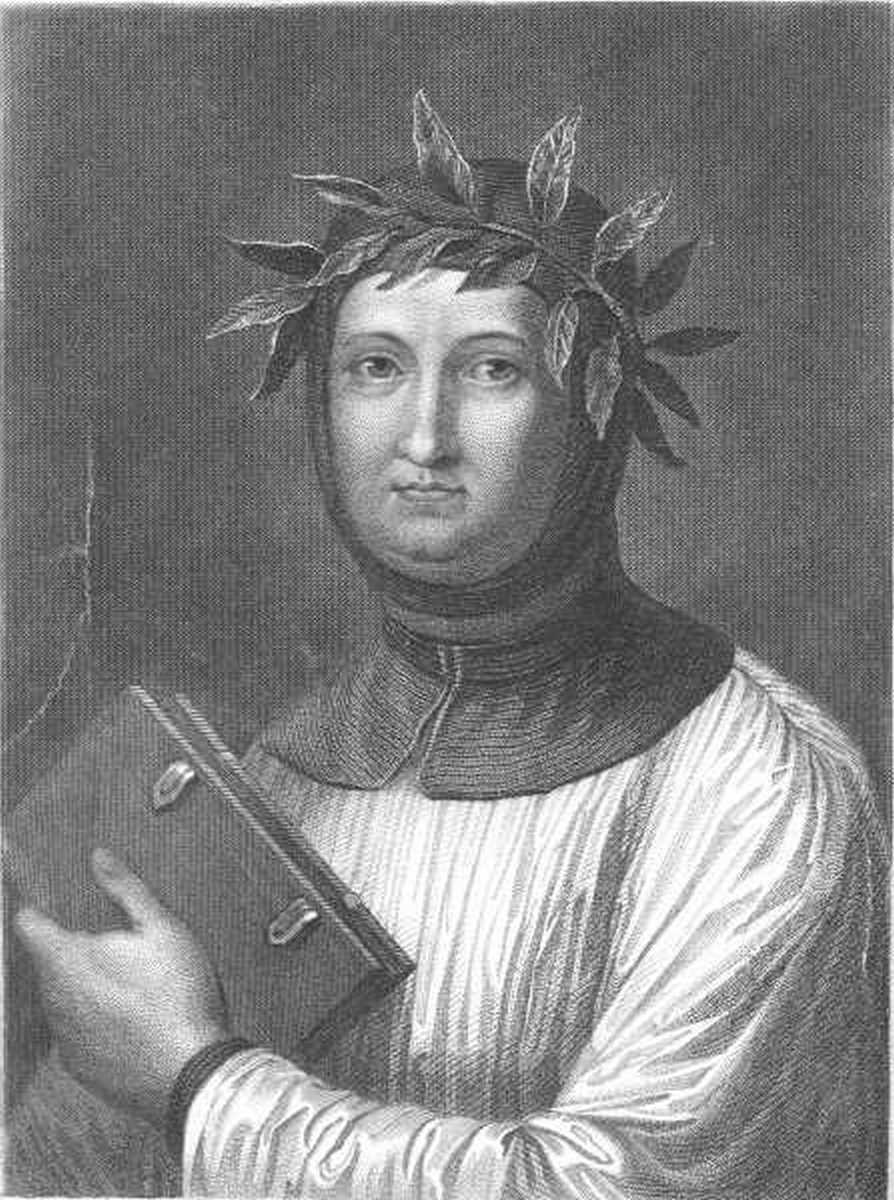
A sonnet is a 14-line poem developed by the Italian poet Petrarch (1304-1374) during the 14th century. Enamored by a lifelong love for a mysterious and elusive woman known as Laura, Petrarch composed 366 of these poems (for every day of a leap year) that…

View original post 1,544 more words

August 2014

Jenny Diski's avatarThis and That Continued

This was written in August to be translated for my column in the Swedish Goteborgs-Posten.

Some things are best met with silence. If I were to proceed with this month’s column in an honest way, it would be a blank page, without words. The imaginary blankness of the page represents the other blanknesses I have already created in my life, these past few weeks. A friend just phoned to talk to me about a mutual friend who sadly is very ill. We talk about how she will manage, what we can do, how although we know her and she is our friend, there are thousands, millions of others, also struck down with severe illness. We must bear them in mind, but our friend is our friend and her experience concerns us directly. When that conversation is done, my friend on the phone says, ‘I’m sure we don’t have to talk…

View original post 982 more words

Design a site like this with WordPress.com
Get started